UX Strategy
Journey Mapping
Mapping the hidden cost of fragmented systems across 13 Fresh departments.

The Problem
Kroger's Fresh department spans 13 recap departments, each managing cost change requests differently — through a patchwork of iTrade, EDI, Excel, email, and DemandTec. There was no standard process. Inaccurate cost data flowing into buying and pricing systems caused Kroger to systematically overpay suppliers and blocked downstream teams.
"No real time data for Fresh in the buying system. — Buyer, Beef Department"
The Approach
The primary output was detailed journey maps per Fresh category, documenting every step, system, role, and pain point from supplier initiation to PO confirmation. These became the evidence base for a strategic product decision.
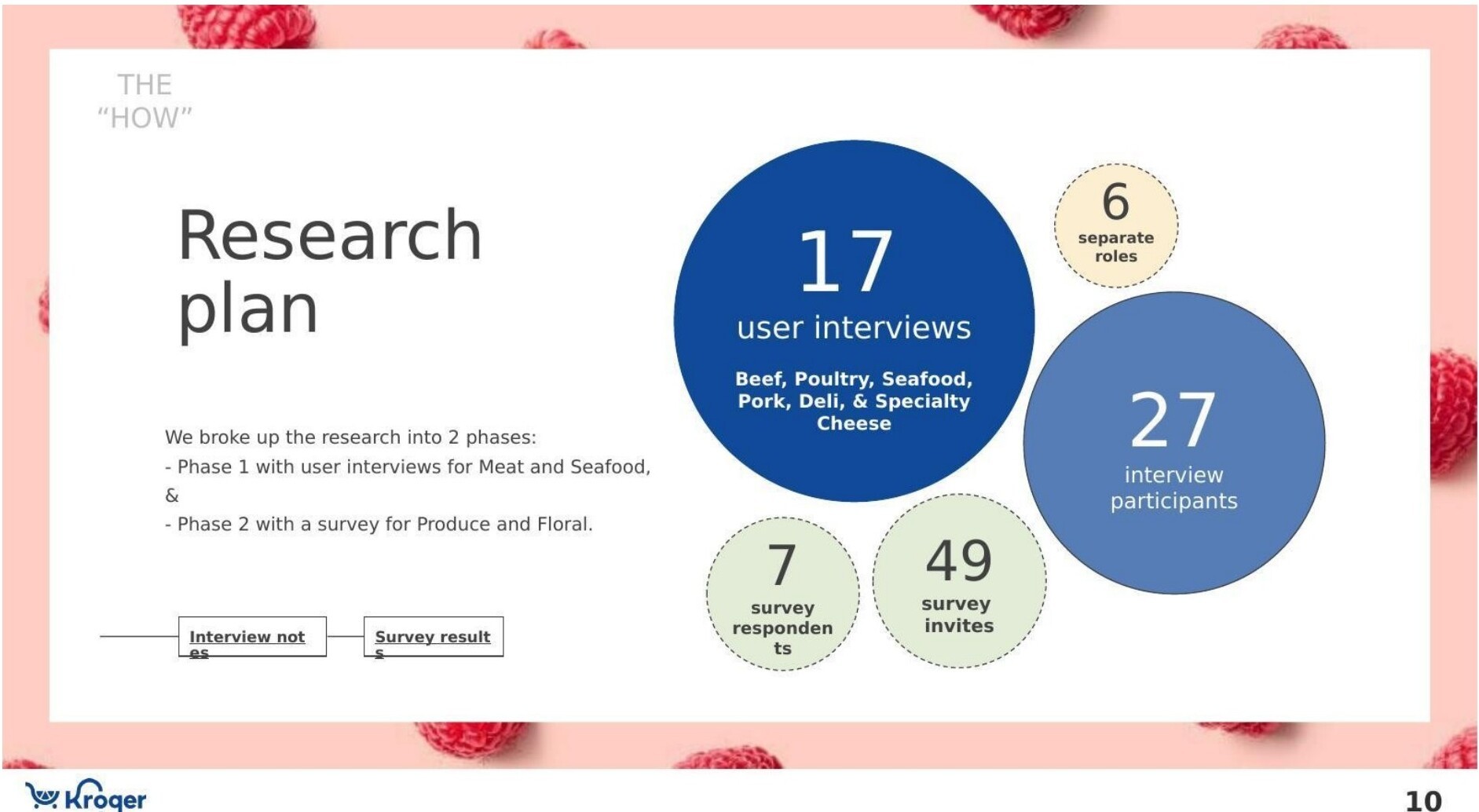
Phase 1 — Interviews: 17 moderated interviews with 27 participants across Beef, Poultry, Pork, Seafood, Deli, and Specialty Cheese. Roles: Category Managers, ASPs, Buyers, and Sourcing teams.
Phase 2 — Survey: 49-participant survey for Produce & Floral departments (7 respondents). Results triangulated with Phase 1 interview data.
Phase 3 — iTrade Deep-Dive: 14 focused interviews with Produce & Floral to understand how iTrade is used for cost changes and whether DemandTec could replace it.
What We Discovered – 5 Journey Maps
The primary output was detailed journey maps per Fresh category, documenting every step, system, role, and pain point from supplier initiation to PO confirmation. These became the evidence base for a strategic product decision.
Beef & Pork
Used iTrade, but 90% of ASP time was manual copy-paste between Excel and iTrade. No system confirmation — success was defined by a supplier email reply saying "all costs match."
Poultry
Cost changes via EDI with many manual steps. Timing mismatches caused reconciliation issues every period. CM team created a dedicated email inbox as a workaround.
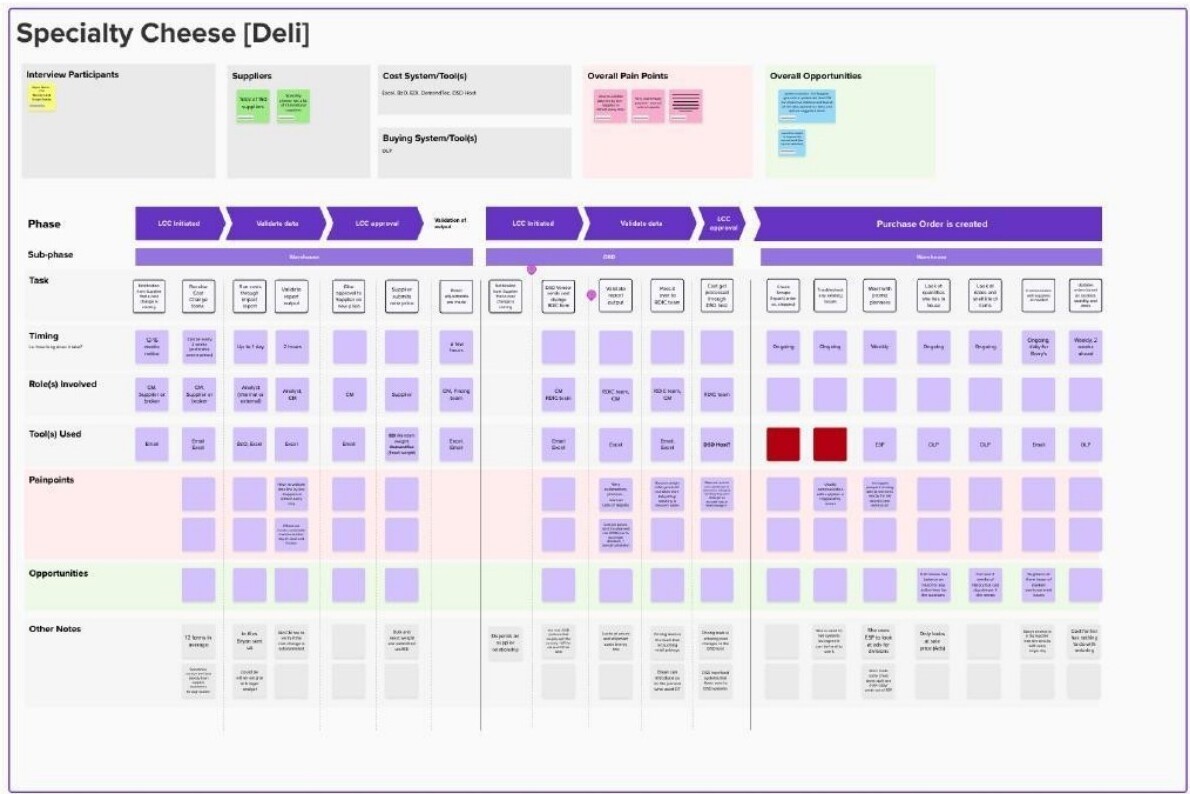
Specialty Cheese
With 150+ suppliers (many international), each cost change required form intake, validation, and impact reports — spanning several days to a full week per period.
Seafood
Self-described as "the most complicated department." 100+ suppliers, multiple warehouse models, market-driven fluctuations. No iTrade used. No two cost changes looked the same.
Bulk Deli
The exception: strong supplier relationships and an RFP-defined pricing formula made cost changes smooth and largely error-free — a benchmark for a well-designed process.
The Solution
Leadership assumed Produce and Floral departments would be willing to move away from iTrade. The research told a different story: iTrade is not just a cost change tool — it's the operational backbone for orders management, shipping, booking, and vendor billing. Replacing it would disrupt the entire procurement workflow, not just a single task.
Cost volatility is the daily operating norm
Produce and Floral experience far more price fluctuation than Meat or Seafood. Berries, citrus, and tropical fruits can shift weekly. Cost changes aren't periodic — they're woven into daily operations.
iTrade manages the full order lifecycle
Replenishment Buyers submit 50+ purchase orders per day through iTrade, including shipping assignments, bookings, and billing reconciliation. A cost change migration would have meant disrupting the entire procurement workflow.
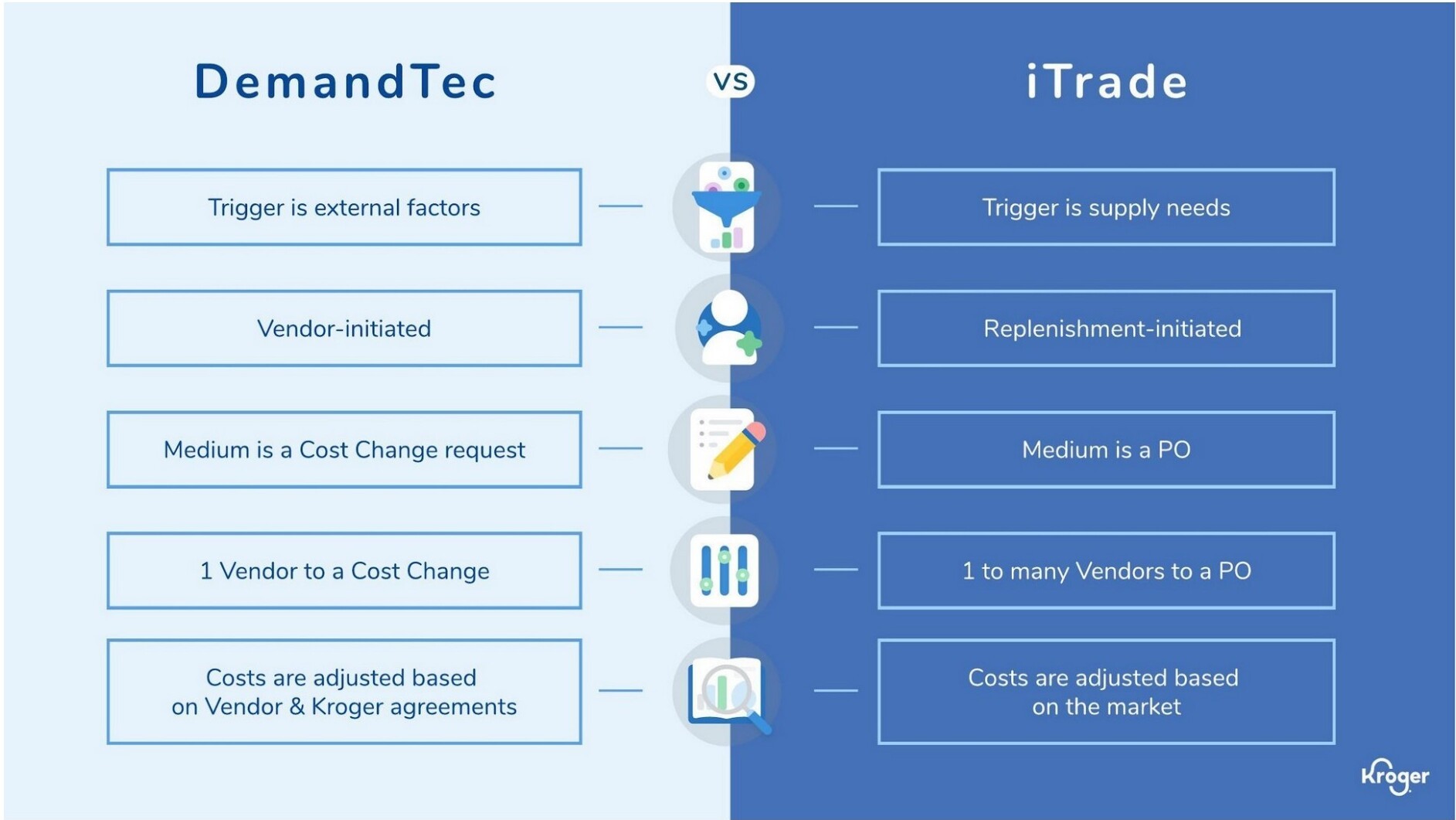
Two tools, fundamentally different models
DemandTec is vendor-initiated, triggered by external market factors. iTrade is replenishment-initiated, triggered by supply needs. One cannot replace the other without significant process redesign.
"iTrade is how Suppliers are seeing Orders. Main form of communication with suppliers. — Commodity Buyer, Vegetables"
The Impact
Rather than a wholesale migration, the research led to a targeted pilot: four Fresh departments that did not rely on iTrade — Poultry, Seafood, Specialty Cheese, and Bulk Deli — were identified as the right candidates for DemandTec. These departments already depended on fragmented manual workflows, and centralizing them would deliver immediate data accuracy improvements without disrupting procurement.

"Definition of success moment — when Supplier replies "all costs match" in the email from the RASC team. — ASP, Beef Department"